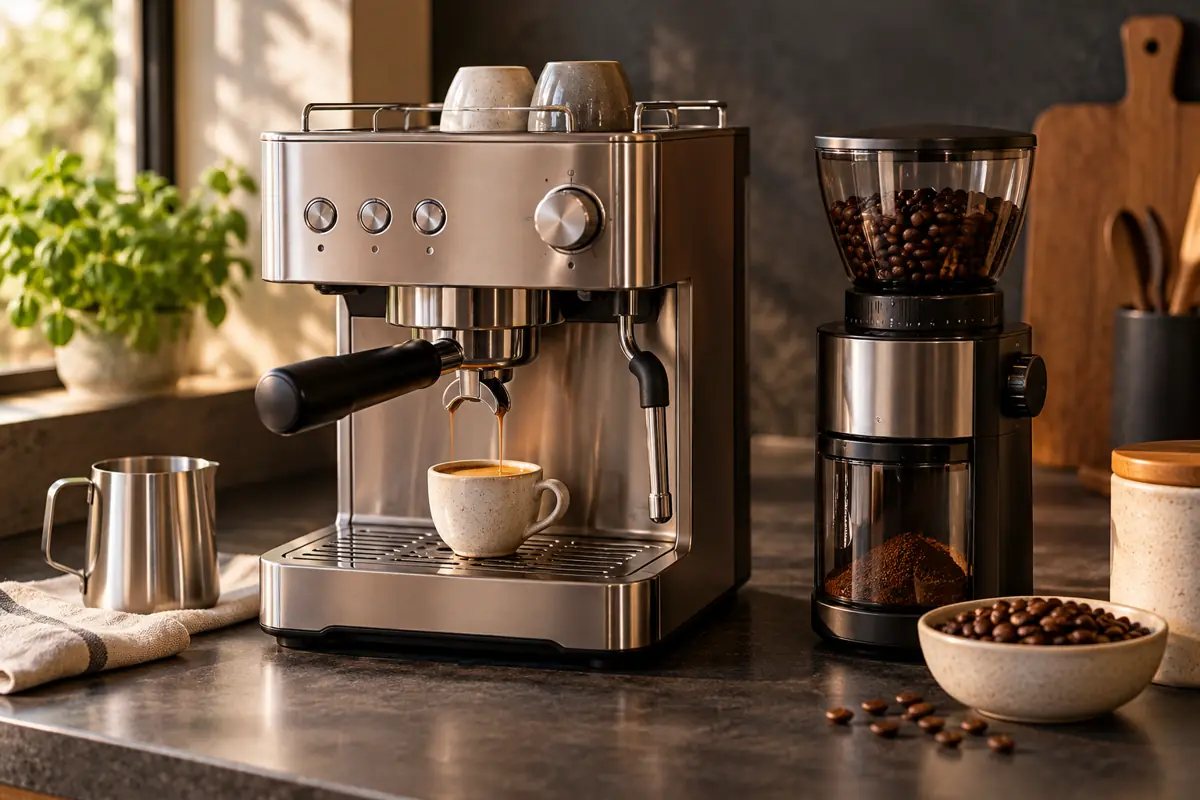
Buying an espresso machine is really a decision about workflow. Two machines can both make good coffee while asking completely different things from the person using them.
Chef Alex's starting point
Start with the drinks you make most often. Straight espresso, two lattes every morning, or several coffees back-to-back create different priorities. Then decide whether coffee preparation is a hands-on routine you enjoy or something you want done quickly before work.
Buy the workflow you want to live with every day.
What I actually use
I have used both automatic and more traditional espresso machines at home and professionally, including De’Longhi machines. Today, I use an automatic espresso machine at home because the convenience fits my routine.
One of the things I like about making espresso at home is being able to choose the coffee beans I actually enjoy and then adjust the grind and machine settings to suit those beans and my taste. That ability to start with coffee you like matters more to me than simply buying a machine with the longest feature list.
My experience with De’Longhi is personal experience, not a blanket recommendation for every model. I would still choose any espresso machine around the workflow, coffee, cleaning and level of control that fit the person using it.
Semi-automatic or bean-to-cup?
A semi-automatic machine gives you more control over grinding, dosing, tamping and extraction. That can be rewarding, but it means learning the process.
A bean-to-cup machine automates much of that work. You trade some manual control for speed and repeatability.
Neither category is automatically better. If dialing in coffee is part of the hobby, manual control makes sense. If you want a cappuccino with minimal effort, automation may be worth more than extra manual capability.
The grinder is part of the machine
For traditional espresso, the grinder is part of the brewing system. Small grind changes can have a large effect on extraction.
If the machine does not include a suitable grinder, include one in the real purchase budget. I would rather have a balanced machine-and-grinder setup than spend nearly everything on the espresso machine and compromise the grind.
Milk drinks change the priorities
If you make cappuccinos, flat whites or lattes, look closely at steam performance:
- how quickly the machine is ready to steam;
- whether it can brew and steam at the same time;
- how much milk you normally prepare;
- how easy the steam wand or automatic milk system is to clean.
Automatic milk systems trade some control for convenience. That can be a good trade when it matches your routine.
Cleaning is part of ownership
Coffee oils, milk residue and mineral buildup do not care how much the machine cost.
Before buying, check how you will clean the brew group, portafilter or brewing mechanism, steam wand, drip tray, water tank, grinder and internal cleaning system.
If normal cleaning feels annoying before you buy it, it will not become more enjoyable six months later.
Water matters
Water chemistry affects flavour and scale formation. Follow the manufacturer's water recommendations rather than assuming maximum filtration is always better.
If the machine requires proprietary filters, include their replacement cost in the ownership budget.
Measure the counter
Check width, depth, overhead clearance, water-tank access, bean-hopper access, cup clearance and where the grinder will sit.
A machine that technically fits but must be dragged forward every morning is not a good fit.
Do not shop by pump pressure alone
Large pressure numbers are easy to market. They do not tell you whether the machine manages brewing temperature, flow, grind and extraction well.
I would judge the complete brewing system and daily routine instead.
What I would pay more for
I would consider spending more for temperature consistency, a workflow suited to your household, useful steam performance, easy cleaning, serviceability, and parts and warranty support in Canada.
What I would not automatically pay extra for
I would not choose a machine mainly because of an oversized touchscreen, huge pump-pressure numbers, dozens of presets I will not use, cosmetic finishes or connected features that do not improve the coffee.
My practical buying checklist
Before buying, I would ask:
- What drinks do I make most?
- How much control do I want?
- What will a suitable grinder cost?
- How important is milk steaming?
- How much cleaning am I willing to do?
- Does the machine actually fit?
- What are the ongoing filter and maintenance costs?
- Can I get parts and service?
- Am I paying for better coffee and workflow, or mostly features?
Bottom line
The best home espresso machine is not automatically the most expensive, most manual or most automated. It is the machine whose daily routine fits the way you actually drink coffee.
Build the budget around the complete system — machine, grinder, water, cleaning and maintenance. Kitchen Chaos recommendations will be added when products genuinely fit these priorities.