Water touches almost everything in a kitchen: drinking, coffee, tea, ice, stocks, dough and equipment. That does not mean every kitchen needs an elaborate filtration system.
My starting rule is simple: define the water problem before buying the filter.
What I actually use at home
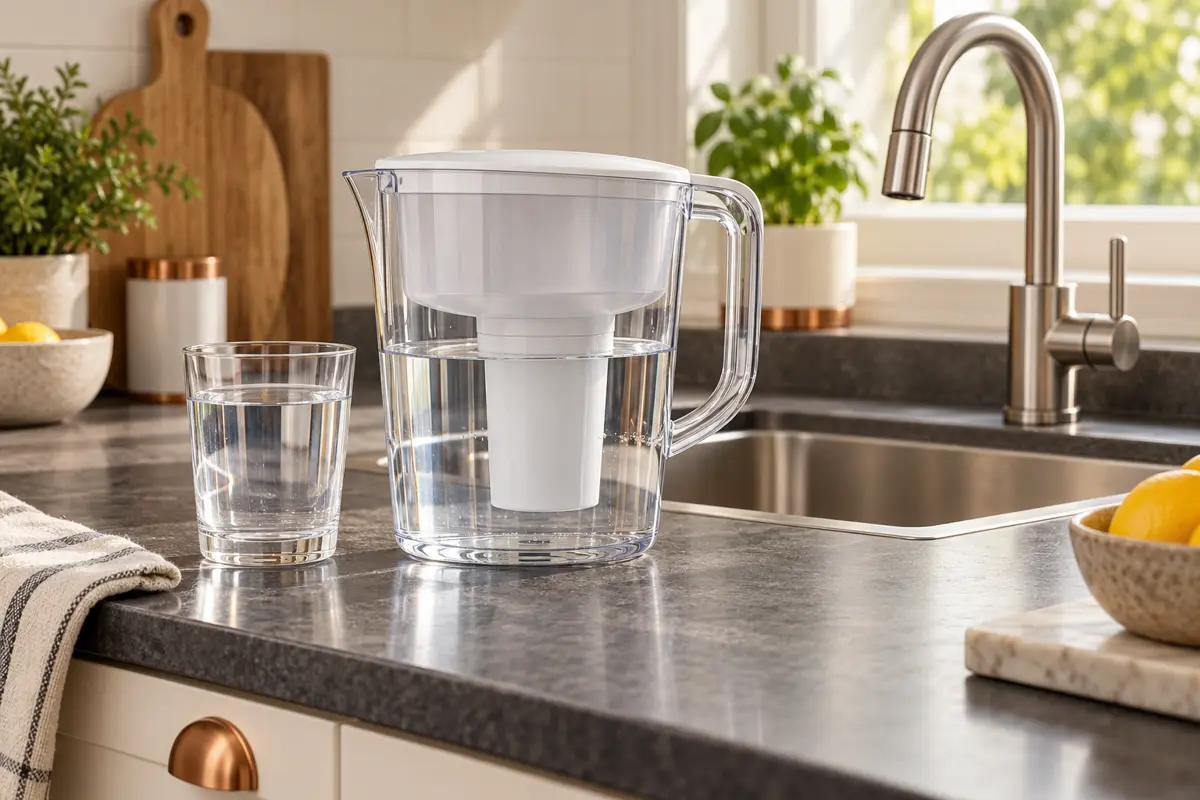
At home, I keep my drinking water simple: I use a Brita filter for the water I keep in the fridge. For that everyday use, convenience matters — it is easy to keep cold filtered water available without turning the kitchen into a complicated filtration setup.
That does not mean the same type of filter is the right answer for every water issue. If I were trying to address a specific contaminant, hardness problem or equipment requirement, I would choose filtration around that particular job.
Chef Alex's starting point
I would not begin by asking whether reverse osmosis, carbon filtration or another technology is "best." I would begin with: what are you trying to change?
Taste and odour, sediment, hardness and concern about a specific contaminant are different problems. A filter designed for one purpose should not automatically be expected to solve the others.
Review current information from your water supplier where applicable and use appropriate testing when you have a specific concern. Then shop for treatment that matches the problem.
Countertop, under-sink or reverse osmosis?
Countertop systems can be easier to install and move, but they use valuable counter space and may have capacity or flow limitations.
Under-sink systems keep equipment out of the work area and can feed a dedicated faucet, but cabinet space, plumbing and cartridge access matter.
Reverse-osmosis systems can be appropriate for particular treatment goals, but they generally involve more components, filter changes and wastewater considerations.
The most complex system is not automatically the best one.
Look for claims that match the job
When a product claims to reduce a particular substance, look for relevant independent certification or credible performance documentation rather than relying only on marketing language.
Also check what the certification actually covers. Certification for one claim does not mean a system solves every possible water concern.
For health-related contaminant concerns, use appropriate public-health or water-quality guidance rather than advertising alone.
Replacement filters are part of the purchase price
Before buying, calculate:
- replacement frequency;
- cartridge cost;
- number of cartridges;
- shipping;
- availability in Canada;
- whether the system uses proprietary filters.
A cheap system with expensive consumables can become the expensive option. I would compare several years of realistic ownership cost.
Flow rate affects kitchen workflow
A system can perform well on paper and still be irritating if filling a kettle or pot takes forever.
Think about whether filtered water is only for drinking or also for coffee and cooking. Capacity and flow should match the actual use.
Installation and service access matter
Check under-sink space, faucet requirements, water connections, drain requirements where applicable, pressure requirements and how easily cartridges can be changed.
If routine maintenance means dismantling half the cabinet, maintenance is more likely to be postponed.
Coffee equipment adds another consideration
Water affects flavour and scale formation, but extremely low-mineral water is not automatically ideal for every coffee machine.
Follow equipment-manufacturer guidance where applicable. If filtration is partly intended to protect an espresso machine, make sure the resulting water is suitable for that equipment.
What I would pay more for
I would consider spending more for documented performance relevant to the actual problem, independent certification where appropriate, useful flow and capacity, easy maintenance, reliable replacement-filter availability and good support.
What I would not automatically pay extra for
I would not buy mainly because a system has the longest contaminant list, the most filtration stages, an elaborate display or technology that does not address my identified water issue.
Complexity is not the same as effectiveness.
My practical buying checklist
Before buying, I would ask:
- What exactly am I trying to improve?
- What does my current water information or appropriate testing show?
- Which performance claims are relevant?
- Are those claims independently supported where applicable?
- What is the usable flow rate?
- What space and installation are required?
- What will replacement filters cost each year?
- Are cartridges readily available in Canada?
- Does my coffee or other equipment have specific water requirements?
Bottom line
Buy filtration for a defined reason.
A straightforward system that addresses your actual water issue, fits your kitchen and gets maintained properly is more useful than an elaborate system chosen from marketing claims alone.
Kitchen Chaos recommendations will focus on documented purpose, operating cost and real kitchen workflow rather than the number of stages printed on the box.
 Water filtration
 Water filtration