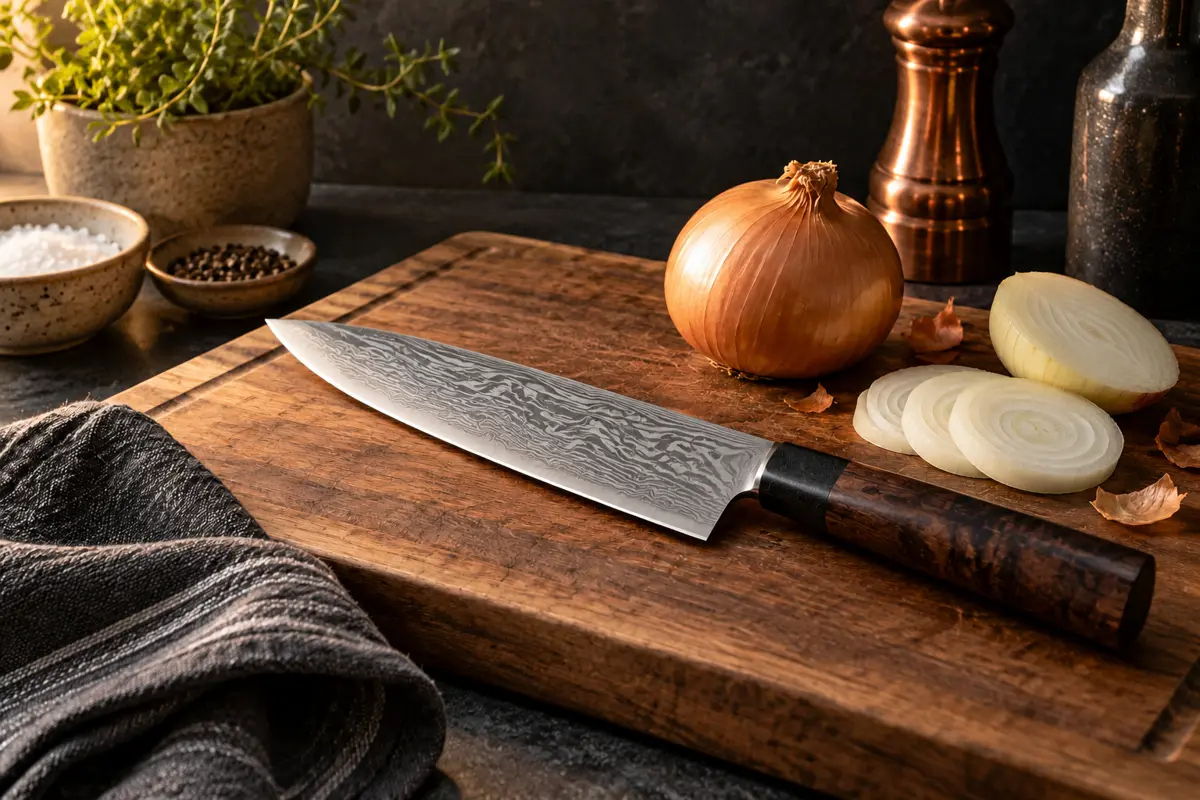
Expensive kitchen gear is not automatically better.
The useful question is whether spending more improves performance, durability, safety, repairability or the work you do every day.
That is a very different question from asking which brand has the highest price.
Chef Alex's starting point
I divide kitchen purchases into two broad groups:
Tools where small performance differences affect the work repeatedly.
And:
Tools that perform a simple job perfectly well without premium engineering.
Spend more selectively in the first group. Be much harder to impress in the second.
Your own cooking frequency should decide which group a product belongs in.
Spend where precision matters
Temperature, measurement and cutting are areas where performance differences can show up constantly.
That can include a dependable instant-read thermometer, an accurate scale, a comfortable chef's knife and equipment where consistent temperature control matters.
You do not necessarily need the most expensive model. You need one that is sufficiently accurate, repeatable and reliable for the job.
Spend on tools you touch constantly
Frequency changes value.
A knife, cutting board, pan or appliance used almost every day has many opportunities to repay a modest improvement in comfort, durability or performance.
A specialized machine used twice a year has far fewer.
Before upgrading, ask how often your hand will actually touch the product.
SEE THE DIFFERENCE · BOARDS
Choose a prep surface, then a serving surface.
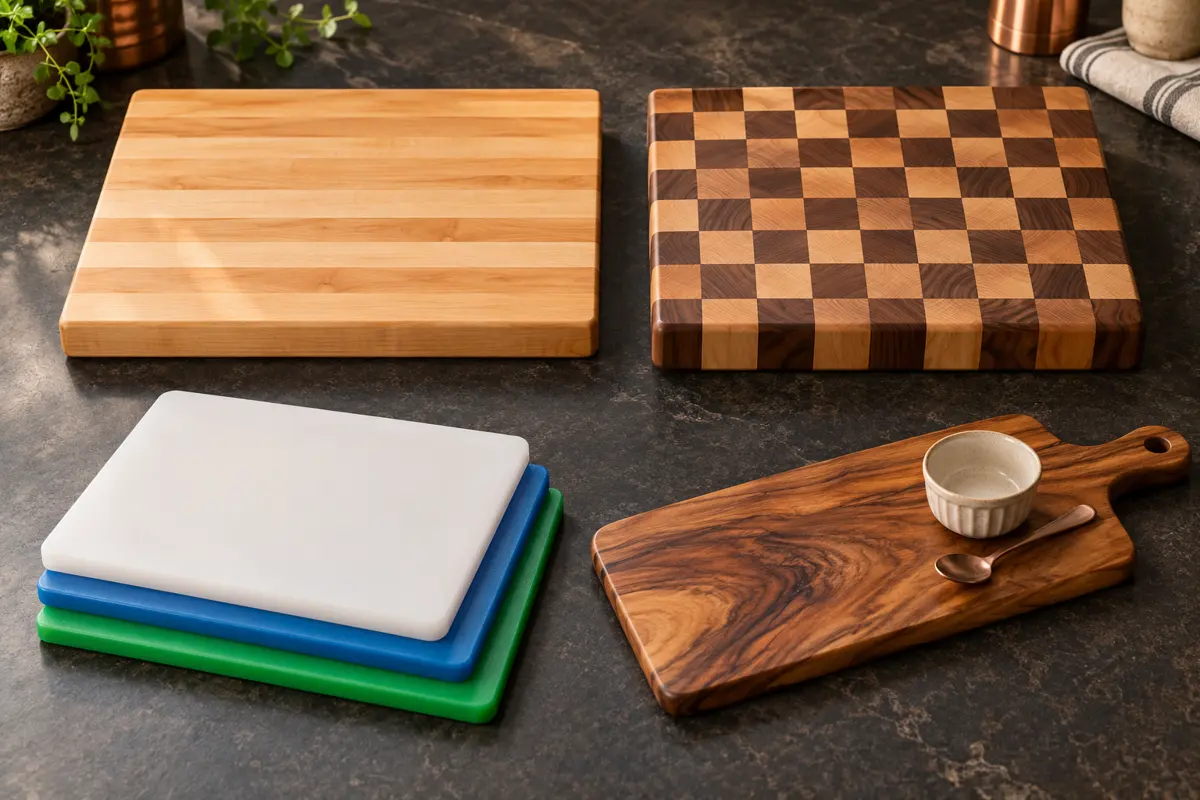
Edge-grain wood
Long wood strips run across the face. Look for enough working space, stability and a maintenance routine you will follow.
End-grain wood
Short blocks stand on their ends, often giving a checkerboard appearance. Construction and upkeep matter more than the pattern alone.
Plastic prep boards
Colour can help you organise tasks. Keep a separate board for raw meat, poultry and seafood from ready-to-eat foods. Follow the maker’s cleaning instructions.
Serving boards
A paddle or platter gives cheese, bread and small bowls room to work. A decorative serving surface is not automatically suitable for chopping.
Alex’s approach: practical, colour-coded boards for prep; a custom wood board for presentation. Do not assume every wooden or plastic board is dishwasher-safe.
Read more: John Boos on wood construction · USDA cutting-board care and separation.
Save on simple jobs
A lot of kitchen work does not require premium branding.
Mixing bowls, basic utensils, simple storage and similar equipment can often be chosen around useful dimensions, durability, stability and cleanability.
If two products perform the same straightforward job reliably, I do not see a reason to pay dramatically more for the logo.
Do not let bundles choose your kitchen
Large cookware sets and knife blocks can create the appearance of value by giving you more pieces.
More pieces are not automatically more useful.
If a 12-piece set contains five items you rarely touch, buying fewer, better-chosen tools may give you more actual value.
I would rather build a kitchen one useful piece at a time.
Cookware: pay for the job
Different pans have different jobs.
Look at construction, usable cooking surface, handle comfort, oven compatibility and how the pan performs for the task.
The pan you sear in, the pot you boil pasta in and the pan you use for delicate eggs do not necessarily need the same construction or budget.
Knives: fewer and better chosen
You do not need a giant knife block.
For many home kitchens, a chef's knife, paring or utility knife and serrated knife cover most normal work.
I would put money into comfort, geometry and keeping those knives sharp before buying several specialty blades.
SEE THE DIFFERENCE · BLADE MATERIALS
The finish is visible. The steel specification is not.

A plain blade can be stainless or reactive carbon steel. A layered pattern can appear on different constructions. These pictures show surface appearances, not a way to identify an alloy.
Plain / satin finish
A relatively even surface tells you about the finish. It does not reveal the steel grade, heat treatment or edge retention.
Patina
Reactive carbon steel can develop blue-grey colour through use. Patina and rust are different; blade care still matters.
Damascus pattern
The visible waves are not a steel grade or a performance guarantee. Check the cutting-core steel and the maker’s care instructions.
| Term | What to check |
|---|---|
| Stainless steel | Corrosion resistance and the actual grade. Stainless does not mean maintenance-free. |
| Reactive carbon steel | Whether you want the extra attention to wiping and drying, and a blade that changes colour. |
| Powder metallurgy | A manufacturing route, not a visible finish. Look up the named steel and the finished knife’s specification. |
| Damascus / layered cladding | How the blade is constructed and what steel forms the cutting edge. Pattern alone does not answer either question. |
Buying takeaway: choose the care level, geometry and sharpening plan that suit your kitchen. A more dramatic pattern does not automatically make prep easier.
References: Japanese Knife Imports on steel and patina · Shun’s blade and construction specifications.
Appliances: serviceability matters
Before spending heavily on an appliance, check:
- warranty;
- replacement parts;
- consumables;
- filters;
- seals;
- blades;
- service options;
- availability in Canada.
A premium appliance becomes much less premium if one worn component turns it into e-waste.
Repairability and parts support are features.
Cleaning is a performance feature
Professional kitchens value equipment that can be cleaned quickly and thoroughly because cleaning is part of the work.
Complicated seams, inaccessible areas, fragile finishes and unnecessary components add labour every time the product is used.
When two products perform similarly, I usually favour the one that is easier to clean and put back into service.
Use cost per use
Cost per use is not perfect, but it is a useful reality check.
A $300 tool used five times costs $60 per use. A $300 tool used 1,000 times costs 30 cents per use before maintenance.
That does not make every frequently used expensive product a good purchase. It shows why frequency should matter more than the excitement of buying something new.
Where I am more willing to spend
Depending on the cook, I am more open to spending on:
- the primary chef's knife;
- a stable, knife-friendly cutting board;
- an accurate thermometer;
- a reliable digital scale;
- cookware used constantly;
- appliances where consistency, repairability and parts support matter.
The principle is repeated use plus meaningful performance.
Where I would usually start by saving
I would be cautious about premium prices for:
- simple mixing bowls;
- basic prep utensils;
- decorative storage;
- large matching sets;
- novelty single-purpose gadgets;
- specialty equipment for food you rarely make.
Simple does not mean low quality. It means there may be fewer meaningful ways for an expensive version to outperform a sensible one.
What I would not pay for
I would not automatically pay more for prestige branding, decorative finishes, oversized bundles, app connectivity without a useful purpose or specifications that do not change the cooking.
If I cannot explain what the extra money improves, I probably do not need the upgrade.
My practical buying checklist
Before spending more, I would ask:
- How often will I use this?
- What measurable problem does the more expensive version solve?
- Will it make the job faster, easier, safer or more consistent?
- Is it easier to clean?
- Is it repairable?
- Can I get replacement parts or consumables?
- Does it have a useful warranty?
- Am I buying capability I need or features I simply like the idea of owning?
- What does the product cost per realistic use?
Bottom line
Spend more when the improvement affects a frequent task, measurable performance, durability or useful lifespan.
Save when the premium is mainly appearance, branding or features your cooking does not require.
That is also how Kitchen Chaos will approach product recommendations: not "expensive is better," but where does the extra money actually earn its place in the kitchen?