Mustard can do more than sit beside the sandwich tray. On a charcuterie board, a small spoonful can bring sharpness, sweetness or a coarse texture to a rich bite. The useful question is which mustard fits the meat and cheese you are serving.
Start with a small amount and taste the complete combination. Mustard strength varies, and a bold jar can quickly take over a mild cheese.
Whole grain mustard: a flexible starting point
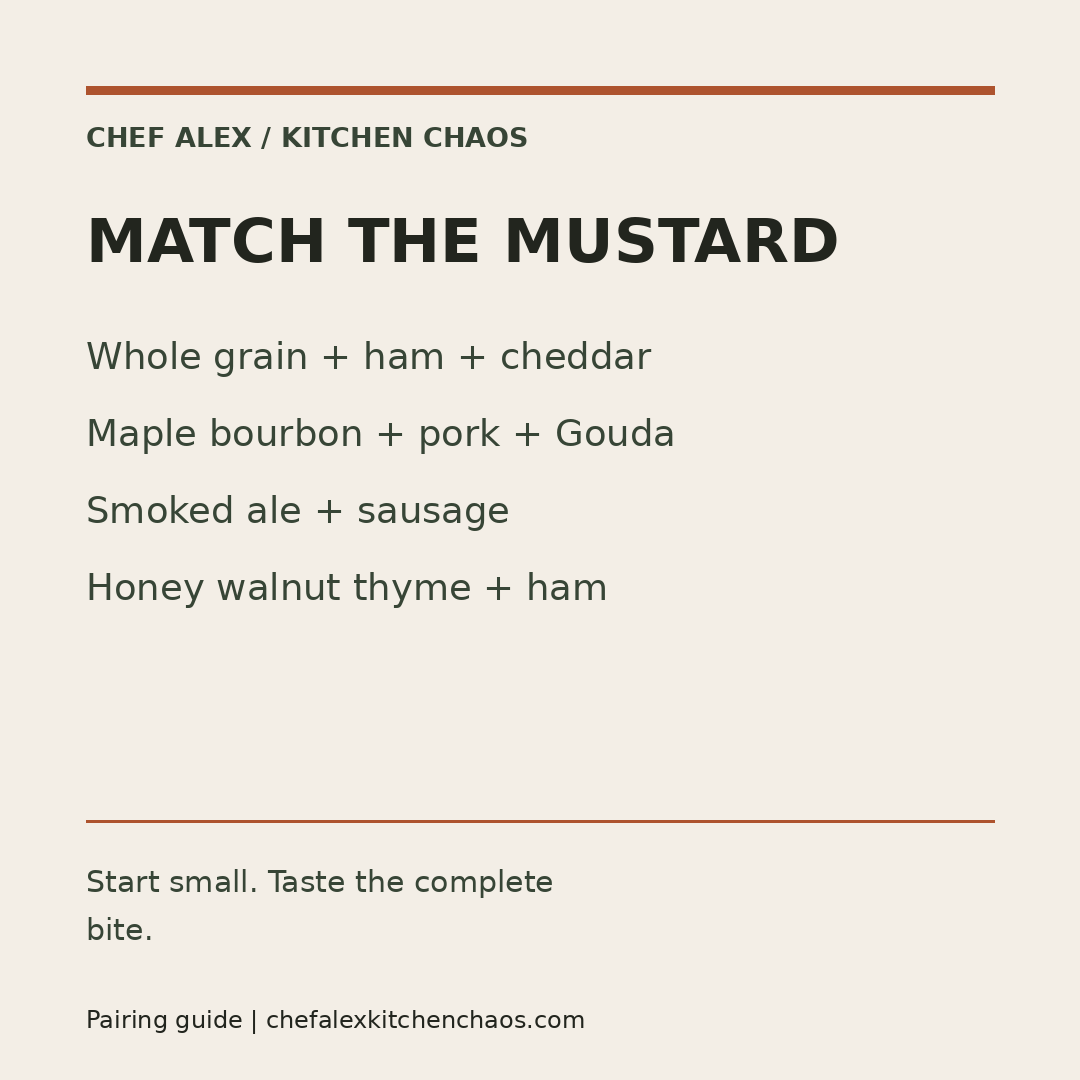
Classic whole grain mustard brings seed texture and a straightforward tang. Try it with ham or roast beef and aged cheddar or Gruyère. The meat and cheese provide richness; the mustard adds contrast.
Serve plain bread or crackers alongside it so the base does not add another strong seasoning. If the cheese is particularly sharp, use less mustard and taste before adding more.
Maple bourbon mustard: sweetness with a savoury board
Maple bourbon mustard is a pairing to consider when you want some sweetness beside ham or roast pork. Aged cheddar or smoked Gouda can take the board in a different direction from the classic whole grain option.
You do not need to add another sweet preserve to the same bite. Offer fruit elsewhere on the board and let guests try the mustard with the meat first.
Bourbon is an ingredient in this variation. Gentle heating does not establish that a preparation is alcohol-free. For guests avoiding alcohol, offer a suitable alternative rather than assuming the finished mustard meets their needs.
Smoked ale mustard: choose a supporting cheese
Smoked ale mustard combines beer character with smoked paprika. Try it alongside sausage or roast beef, with a cheese such as smoked cheddar or Gouda. If several ingredients are smoky, keep the portions small and add a simpler cheese option elsewhere on the board.
This is also a reason to look at the beer label. A beer-based mustard may contain gluten from barley or other grains. It should not be presented as gluten-free without checking the actual ingredients and preparation.
Honey, walnut and thyme: a gentler sweet direction
Honey, walnut and thyme mustard offers sweetness, herb flavour and nut texture. Try it with ham or pork pâté and aged cheddar or a compatible cheese you already enjoy.
Keep this mustard clearly identified and separate from other condiments because it contains walnuts. A dedicated spoon is useful, and the cheese or meat served beside it needs its own ingredient check too.
Make the comparison easy
You do not have to serve all four mustards at once. Choose one for a small board. For a larger gathering, offer two contrasting options and label them. Taste the same cheese with each mustard to understand which combination you prefer.
Keeping portions small also makes the board easier to balance. Mustard is an accompaniment, so leave room for the meat, cheese and bread to remain part of the bite.
If you are planning homemade accompaniments, choose the flavour before making the shopping list. That is a more useful starting point than preparing several jars and finding a board to fit them afterward.