A charcuterie board does not need a dozen cheeses or every jar in the fridge. It needs a few ingredients that work together. Think about the bite someone will build: a piece of cheese, a slice of meat, a cracker and a small amount of something bright or sweet.
For a manageable starting point, choose two contrasting cheeses, one or two meats, a crisp base and two accompaniments. Add more only when they bring a different flavour or texture.
Give each ingredient a job
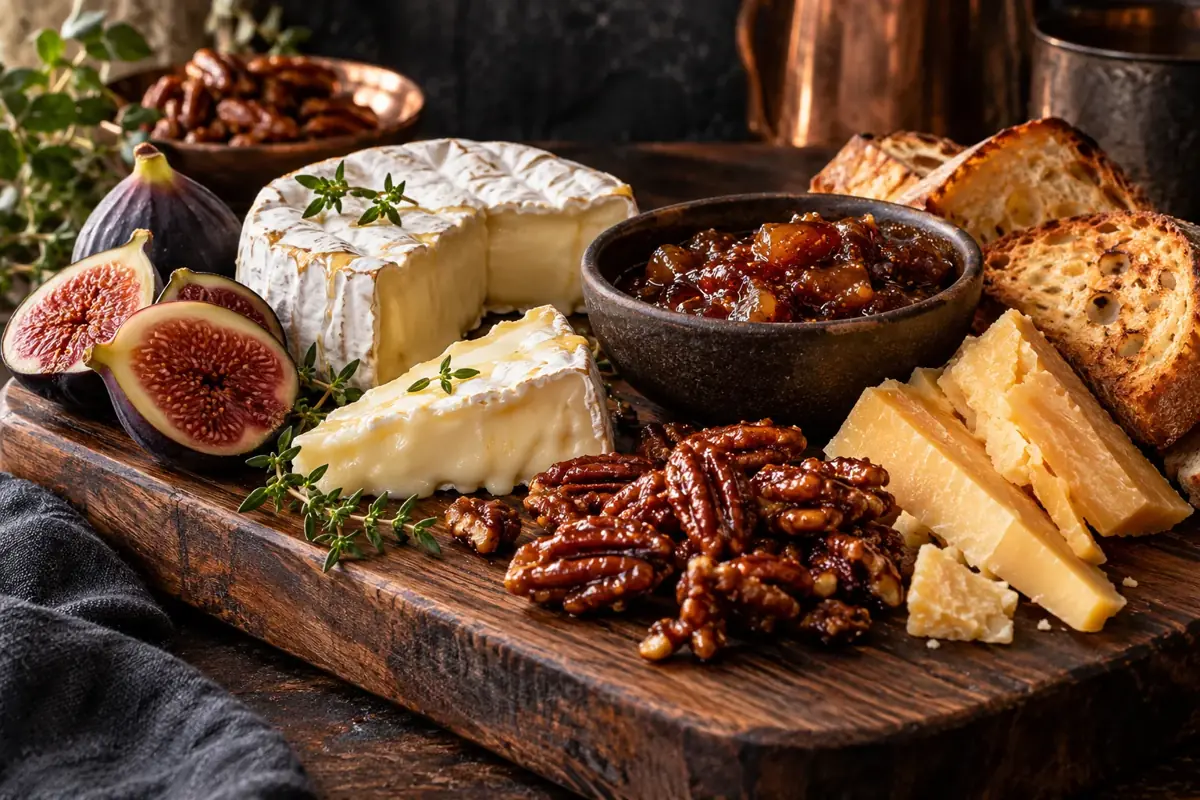
Start with a creamy cheese such as Brie and a firmer cheese such as aged cheddar. The contrast makes it easier to build different bites without buying a large selection.
Then choose the meat. A mild ham leaves room for a sharper mustard. Prosciutto brings salt and a delicate texture; fruit can soften the overall bite. A strongly seasoned salami may need a quieter accompaniment so every mouthful does not compete for attention.
Finish with crunch and contrast. Plain crackers or sliced bread carry the other ingredients. Pickled fruit adds acidity and sweetness. Olives bring a savoury, briny note. Mustard adds another layer of sharpness. You do not need all three beside every cheese.
Build a few deliberate pairings
Try aged cheddar with maple pickled apple. Add ham if you want a meat pairing, or keep the bite vegetarian with a plain cracker.
For a softer combination, pair Brie with vanilla pickled pear. A little prosciutto can work alongside it, but the cheese and fruit can also stand alone.
For a firmer, savoury bite, offer Manchego with fennel lemon olives. Keep the olives in their own bowl so guests can choose how much brine and seasoning they add.
These are starting suggestions rather than fixed rules. Taste the ingredients you actually bought: one cheddar may be much sharper than another, and olives vary considerably in saltiness.
Keep strong flavours separate
Put mustard, pickled fruit and marinated olives in small bowls with their own utensils. It keeps the board easier to serve and lets people control the intensity of each bite. It also prevents a wet accompaniment from soaking the crackers before anyone reaches them.
Place the cheese first, arrange meat nearby and add the bowls. Fill the remaining space with bread, crackers and fruit. Leave enough room to reach each item; a crowded board can look generous but be awkward to use.
Make preparation easier
Choose your pairings before shopping. Write down the cheeses and the accompaniments that will go with them, then buy to that plan. For a small gathering, two thoughtful combinations can be more useful than six disconnected jars.
Check ingredient labels and ask guests about allergies. Mustard, nuts, dairy, wheat and other allergens can appear in the food or accompaniments. Keep allergen-containing items separate where practical and do not describe the whole board as allergen-free.
The aim is a board people can comfortably eat, with enough variety to explore. Start with a few clear combinations and let the ingredients earn their place.